
Social media often presents “old money” as a formula anyone can purchase. Neutral tailoring, loafers, understated jewellery, tennis clubs and a carefully controlled way of speaking. Follow the formula, the content suggests, and you can appear as though wealth has always belonged to you.
There is nothing wrong with elegant clothes, good manners or buying fewer, better-made things. The problem begins when an aesthetic is sold as financial wisdom and the customs of one social class are presented as the universal standard for taste, intelligence and respectability.
So, what does it really take to build an old money lifestyle? Which habits can actually help you grow and preserve wealth? And where does aspiration end and class performance begin?
Let’s get into the money, the mindset, and the realities hiding behind the image.
What is Old Money?
Old money refers to wealth that has been accumulated, inherited and preserved within a family across multiple generations. It may include property, businesses, investments, trusts and other assets that continue providing financial security and social advantage to descendants.
The term is also sometimes used to describe families associated with inherited wealth. However, old money itself is not a type of person, personality or fashion style.
Several ideas are frequently mixed together online:
- Old money: Wealth inherited and retained across generations, often accompanied by established social influence and access.
- Generational wealth: Assets and financial resources transferred from one generation to another. It does not necessarily need to be centuries old.
- Quiet luxury: Expensive products characterised by restrained design and limited visible branding.
- Old money aesthetic: A modern visual style inspired by elite schools, country estates, private clubs, traditional tailoring and European resort culture.
These ideas may overlap, but they are not interchangeable. A person can wear the old money aesthetic without possessing inherited wealth. Similarly, someone who has inherited substantial wealth may have no interest in dressing according to the trend.
What Is the Old Money Aesthetic?
The old money aesthetic is a modern fashion and lifestyle trend inspired by popular ideas of how families with inherited, multigenerational wealth dress, live and socialise. It commonly features tailored clothing, Oxford shirts, loafers, cable-knit sweaters, muted colours, understated accessories, country estates, private clubs and traditional leisure activities.
However, this aesthetic should not be confused with old money itself. Old money refers to wealth inherited and preserved across generations, whereas the old money aesthetic is a curated visual interpretation of that wealth. Anyone can adopt the clothing or décor associated with the trend, but doing so does not create inherited assets, financial security, influential networks or social access.
The aesthetic is also highly selective. It presents the attractive symbols of privilege while usually leaving out the financial structures, family connections and historical circumstances that made such lifestyles possible.
Why Does the Old Money Aesthetic Feel So Attractive?
- It creates an image of financial security: Country houses, vintage cars, private libraries and understated clothing suggest a life protected from financial stress.
- It represents stability and permanence: Traditional fashion, inherited objects and historic settings appear timeless in a world shaped by fast-changing trends.
- It offers an escape from economic uncertainty: For people worried about rising costs, unstable jobs or debt, the aesthetic presents an idealised life of comfort and control.
- It promises social belonging: Private clubs, elite schools and exclusive hobbies create the impression of being part of a respected and influential circle.
- It celebrates understated confidence: The style suggests that truly wealthy people do not need large logos or loud displays to prove their status.
- It is highly aspirational on social media: GQ reported in April 2024 that Instagram had nearly 1M posts under #Oldmoney and around 3,60,000 under #OldMoneyAesthetic.
- It appears easy to recreate: Influencers suggest that neutral clothes, polished manners, selected hobbies and controlled behaviour can help anyone adopt the lifestyle.
- It sells more than fashion: The aesthetic is marketed as a complete identity based on refinement, privacy, leisure and effortless success.
- It hides the actual foundations of inherited wealth: Clothing and behaviour cannot recreate family assets, influential networks, elite education or protection from financial risk.
- It turns financial security into a purchasable look: Its commercial power lies in selling the appearance of wealth without providing the assets and systems that create real financial stability.
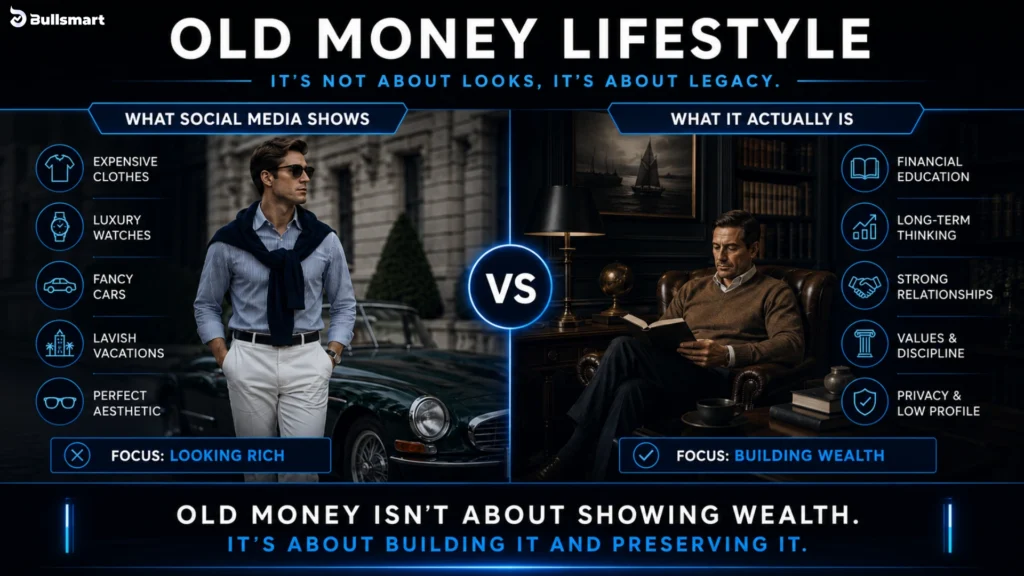
When the Old Money Aesthetic Becomes a Sales Pitch
There is nothing wrong with understated clothing, good manners, calm communication or an interest in art, history and music. These choices do not belong to any particular social class, and people should not avoid them simply because they are associated with the old money aesthetic.
The problem begins when influencers and brands present these behaviours as a formula for looking as though someone has generational wealth.
The message is no longer simply:
Dress well, speak confidently and develop your interests.
Instead, it becomes:
Buy these clothes, visit these places and copy these behaviours so that other people will assume you come from wealth.
This creates several problems:
- Ordinary positive habits are presented as exclusive upper-class traits.
- People are encouraged to buy expensive versions of things they may already own.
- Personal style becomes a performance designed to gain social approval.
- Looking wealthy is confused with actually building wealth.
- People with different clothes, accents, interests or lifestyles may be unfairly seen as less refined.
- The middle class is encouraged to spend money proving that it belongs to a wealthier group.
A logo-free shirt is not automatically better because it appears “old money.” Speaking calmly is not a sign that someone comes from a wealthy family. Enjoying classical music does not make a person more cultured than someone who enjoys another genre.
These can all be genuine personal choices. They become part of a manufactured illusion only when they are used to imitating social status.
Suggested Read: Most Expensive Watch in the World: Watches That Cost More Than a Fortune
The Hidden Realities Behind Old Money
The old money aesthetic usually shows the visible side of wealth: elegant homes, inherited jewellery, private clubs, expensive education and a life that appears financially effortless.
What it often leaves out is the system supporting that lifestyle.
Old Money Is More Than Inherited Cash
Old money may include wealth passed down through:
- Family-owned businesses
- Land and agricultural property
- Homes in valuable urban locations
- Shares and other investments
- Gold, jewellery and valuable collections
- Rental properties
- Trusts and family assets
- Established professional and business networks
The advantage is not limited to the assets themselves. It can also include the opportunities and protection those assets provide.
Suggested Read: Most Expensive Phones in the World
A Financial Head Start May Not Look Like an Inheritance
Generational advantage does not always arrive as a large payment after someone dies.
It may look like:
- Living in a family-owned house without paying rent
- Having college or coaching fees paid by parents
- Receiving support for studying abroad
- Joining an established family business
- Getting money to start a company
- Using family contacts to find clients, jobs or investors
- Receiving help with a home down payment
- Knowing that the family can handle a medical or financial emergency
None of these forms of support is wrong. The problem is pretending that someone who receives them started from the same position as someone who had to manage everything alone.
One person may use their first salary to invest. Another may need to support their family, repay an education loan or cover rent. Their ability to build wealth will naturally be different.
Suggested Read: Most Expensive Alcoholic Beverage in the World
Wealth Is Already Highly Concentrated
A 2024 World Inequality Lab study estimated that in India in 2022-23:
- The top 1% held 40.1% of the country’s wealth.
- The top 10% held 65%.
- The bottom 50% held only 6.4%.
The same study estimated that the top 1% received 22.6% of national income, while the bottom 50% received 15%. These figures show that income and assets are distributed very unevenly in India.
This matters because wealth can create more wealth. Property may increase in value. A business may generate income. Investments may compound. Existing assets may also make it easier to borrow money, take risks or survive a setback.
Suggested Read: The Most Expensive Games Ever Made: GTA 6 Budget, Rare Collectibles & What It All Means
Family Background Can Shape Future Opportunities
India has experienced major economic growth, but movement between social and economic levels has not improved equally for everyone.
World Bank research using data through 2012 found that intergenerational mobility in India had remained broadly unchanged over four decades. It also found significant differences across social groups and geographical areas.
A person’s opportunities may be influenced by:
- The quality of school they attend
- Access to private tuition or competitive-exam coaching
- English-language exposure
- The city or village where they grow up
- Family knowledge about careers and investing
- Access to computers, books and professional guidance
- The ability to take an unpaid internship
- Contacts who can provide introductions or recommendations
Hard work still matters. But hard work does not happen under identical conditions.
Class Can Affect Access
In a lot of spaces, class advantage can overlap with community, geography and family occupation.
Research published by the National Bureau of Economic Research found that workers remain overrepresented in occupations traditionally linked to their caste and underrepresented in occupations considered socially above or below those traditional roles.
This does not mean every person’s future is fixed. It also does not mean caste and wealth are the same thing. It shows that social identity and family background can continue to influence economic opportunities.
Old money content rarely discusses these barriers. It often presents wealth as the natural result of refined taste, confidence and discipline.
When “Refinement” Becomes Classism
There is nothing wrong with:
- Dressing neatly
- Avoiding large logos
- Speaking calmly
- Learning good manners
- Enjoying art, music or literature
- Buying well-made products
These habits do not belong to wealthy families. Anyone can practise them.
The problem begins when society treats certain behaviours as proof that someone belongs to a “better” class.
For example:
- An English accent may be treated as more intelligent.
- An elite school name may receive more respect than actual ability.
- Golf or fine dining may be seen as more cultured than local interests.
- Western clothing may be considered more refined than regional fashion.
- People who speak loudly or differently may be judged as less sophisticated.
- Wealth may be mistaken for discipline, talent or good character.
Good manners should mean treating people with respect. They should not mean copying the habits of the rich or looking down on those with different backgrounds.
The Attractive Image Often Hides the Full Story
The old money aesthetic usually shows:
- Ancestral homes
- Heritage properties
- Family businesses
- Private schools
- Club memberships
- Luxury holidays
- Inherited jewellery
- Leisure and privacy
It rarely asks how those advantages were created or preserved.
The source of an old fortune can differ from one family to another. It may come from business success, land, property, investments or professional achievement. It may also reflect access, social position and opportunities that were not equally available to everyone.
This does not mean every inherited fortune is unethical. It means inherited wealth should not automatically be presented as proof of superior values or exceptional merit.
The Reality the Aesthetic Cannot Copy
Someone can copy a wardrobe, visit a luxury hotel or learn formal etiquette.
What cannot be copied so easily is:
- A debt-free family home
- A profitable business built over decades
- Investments passed down through generations
- Access to influential networks
- Financial support during a crisis
- The freedom to take risks without losing everything
The old money aesthetic shows what privilege looks like. It rarely shows the assets, connections and safety nets that make the lifestyle possible.
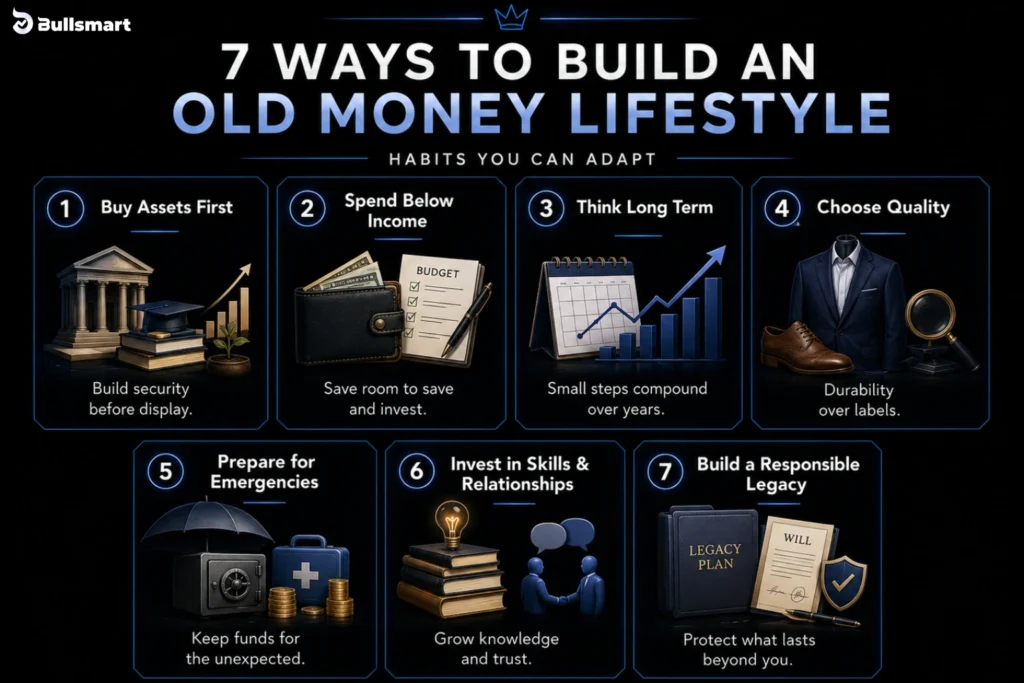
7 Old Money Habits You Can Adapt
These habits are useful because they build financial stability. They are not exclusive to wealthy families.
1. Buy Assets Before Status Symbols
Use part of your income for:
- Emergency savings
- Investments
- Retirement planning
- Education
- A carefully evaluated business
A designer product may improve your appearance. An asset can improve your future choices.
2. Keep Spending Below Income
A higher salary does not create wealth if expenses rise at the same speed.
Enjoy your income, but leave enough room to save, invest and manage emergencies.
3. Think Long Term
Wealth is usually built through consistent actions over many years.
Regular investing, skill development and controlled borrowing may seem slow, but they can create stronger results than chasing trends.
4. Choose Quality, Not Prestige
A high price does not always mean better quality.
Before buying, ask:
- Will I use it regularly?
- Will it last?
- Can it be repaired?
- Am I paying for quality or only the brand?
Buy fewer useful products instead of replacing good items merely to match an aesthetic.
5. Prepare for Emergencies
Keep some money easily available for medical bills, job loss, repairs or other unexpected expenses.
The amount should depend on your income, responsibilities and monthly needs.
6. Invest in Skills and Relationships
Improve your health, communication, professional knowledge and practical skills.
Build relationships through trust and mutual respect, not only to gain access to wealthy or influential people.
7. Build a Responsible Legacy
A legacy includes more than money. It may also include:
- Financial knowledge
- Insurance
- Organised documents
- Updated nominees
- A valid will
- Clear family communication
- Responsible attitudes towards debt
The goal is not to look wealthy. It is to build financial security that can last.
How to Become Old Money Rich
Adopting the old money aesthetic does not mean copying a wealthy family’s lifestyle or buying a wardrobe full of beige clothes. It is better understood as a preference for simplicity, care and timeless personal style. Clothes that fit well and suit your daily life will usually look more polished than expensive pieces chosen only for their label. The same applies to grooming and your surroundings. Looking neat, taking care of what you own and keeping your space comfortable can create a sense of elegance without turning it into a performance.
But the aesthetic should go beyond appearance. Calmness, confidence and good manners feel genuine only when they come from self-respect and consideration for others. Speaking thoughtfully or enjoying art should not become a way to appear superior. Your interests should reflect who you are, whether that means reading history, learning music, cooking, travelling or exploring local culture.
The healthiest way to follow this aesthetic is to take inspiration from its simplicity while leaving behind its obsession with status. The goal is to feel confident and put together, not to convince people that you come from generational wealth.
Bottom Line
Old money may look like tailored clothes, inherited jewellery and quiet confidence, but its foundation is far less visible. It is built through assets, family support, networks, education and protection passed across generations. That is why copying the aesthetic can never recreate the advantages behind it.
Still, you do not need to reject everything associated with the trend. Dressing well, choosing quality, speaking thoughtfully and maintaining good manners can improve your life when they reflect your values. They become a problem only when they are used to imitating wealth, judging others or justifying spending you cannot afford.
The most useful lesson is finance. Build savings, invest consistently, control lifestyle inflation, develop skills and organise what you may pass on. At the same time, recognise that people do not begin with equal resources or opportunities.
So, take simplicity and long-term thinking, but leave behind the class performance. You do not need to convince anyone that you come from generational wealth. Focus on building a secure, thoughtful life that creates freedom for you and a stronger foundation for the next generation.
Disclaimer: This blog is intended for educational and informational purposes only. The financial habits, investment illustrations and wealth-building ideas discussed here should not be treated as personalised financial, investment, legal or tax advice. Returns are not guaranteed, and actual outcomes may vary based on income, expenses, risk tolerance and market conditions. Readers should conduct independent research and consult qualified professionals before making financial decisions. References to old money, generational wealth, class and social privilege are discussed for general awareness and do not describe every family or individual experience.
FAQs
What does it mean to be old money?
Old money refers to wealth that has been inherited and preserved within a family across several generations. It may include property, businesses, investments, trusts and valuable assets. The term describes financial continuity and inherited advantages, not a fashion style, personality or set of manners. Someone may adopt the old money aesthetic without possessing generational wealth.
How to earn ₹1 crore in five years?
To accumulate ₹1 crore in five years, you would need to save about ₹1.67 lakh monthly without investment returns. At an assumed 12% annual return, the required monthly investment is approximately ₹1.24 lakh. This return is only an illustration and is not guaranteed. Choose investments according to your goals, risk tolerance and financial position.
How to dress up as old money?
Choose well-fitted, understated clothes in versatile colours such as white, navy, brown and beige. Focus on clean tailoring, suitable fabrics and well-maintained shoes rather than prominent logos. Combine classic shirts, trousers, kurtas, dresses or blazers with simple accessories. The aim is to look polished and comfortable, not to copy expensive European fashion or display wealth.
How to become old money style?
Adopt the useful parts of the style without pretending to possess inherited wealth. Dress neatly, care for what you own and choose quality over constant trend-chasing. Speak respectfully, remain composed and develop genuine interests. Keep your home organised and comfortable. Old money style should reflect simplicity, confidence and thoughtful living, not overspending, social superiority or manufactured status.