

Investing can feel confusing at first. There are numbers, charts, returns, risks, and endless opinions. But sometimes, all you need is a simple framework to understand how wealth actually grows. That’s where the 8-4-3 Rule of Compounding comes in.
This rule breaks down the power of compounding into easy phases, showing how money can multiply over time if you stay patient and consistent. Instead of focusing on short-term gains, it highlights how time plays the biggest role in building wealth.
The beauty of compounding is that your returns start earning returns. In the beginning, growth may look slow. But as years pass, the acceleration becomes visible and powerful. The 8-4-3 rule helps you visualize this journey in clear stages, making long-term investing feel less abstract and more achievable.
In this blog, we will simplify the 8-4-3 rule, explain how it works with a practical example, and explore ways you can maximize the benefits of compounding. By the end, you will see why time and discipline matter more than trying to time the market.
The Power of Compounding
Compounding is one of the most powerful concepts in long-term investing. It simply means earning returns not just on your original investment, but also on the returns that investment generates over time.
In the beginning, the growth may appear modest. But as your returns get added back to your investment, the base amount increases. This larger base then generates even more returns in the next cycle. Over time, this process can significantly accelerate wealth creation.
For example, suppose you invest ₹20,000 annually at a 10 percent return. In the first year, you earn ₹2,000. In the second year, your returns are calculated on ₹22,000 instead of just ₹20,000. As you continue investing and reinvesting, the compounding effect strengthens each year.
The real advantage of compounding comes from time. The longer your money stays invested, the more opportunity it has to grow. This is why starting early and staying consistent are often more important than trying to chase higher short-term returns.
What is the 8-4-3 Rule of Compounding?
The 8-4-3 rule of compounding is a simplified way of understanding how consistent investing and the power of compounding can accelerate growth. It breaks down investment growth into three phases:
- Initial Growth (Years 1-8): The first eight years see steady growth in the investment with an average return of around 12% annually.
- Accelerated Growth (Years 9-12): Over the next four years, the investment grows at a faster rate, often doubling the value from the first eight years.
- Exponential Growth (Years 13-15): In the final three years, the investment doubles again, thanks to the full power of compounding, which is most effective in the later years.
Example of the 8-4-3 Rule of Compounding
Let’s look at how the 8-4-3 Rule of Compounding works with an example of a Systematic Investment Plan (SIP) in a Mutual Fund.
- Monthly Investment: ₹15,000
- Investment Period: 15 years
- Assumed Annual Return: 12%
Investment Growth Breakdown
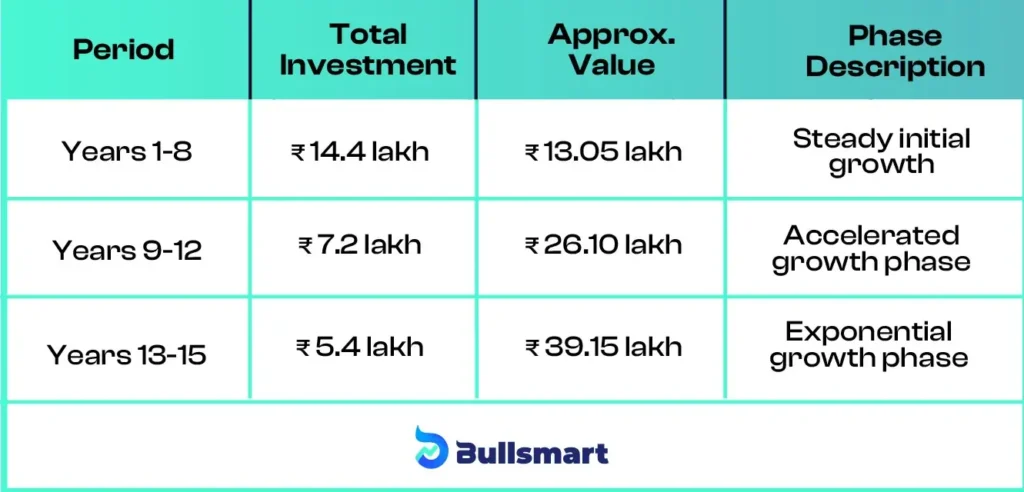
By the end of 15 years, the total value of your investment would be around ₹39.15 lakh, showing how the compounding effect amplifies returns over time.
Benefits of the 8-4-3 Rule of Compounding
- Long-Term Discipline: This rule encourages investors to stick to a long-term plan, helping them stay committed despite short-term market fluctuations.
- Protection Against Inflation: The average return of 12% helps investments outpace inflation, ensuring that the purchasing power of your money is preserved over time.
- Dynamic Growth: The 8-4-3 rule ensures that as time passes, compounding accelerates, leading to faster growth in the later years of your investment journey.
Suggested Read: Liquid Funds: A Proxy to Savings Accounts?
How to Maximize Your Returns
To truly benefit from the 8-4-3 Rule of Compounding, the focus should be on building habits that allow compounding to work consistently over time. Here are some practical ways to strengthen its impact:
Start Early: Time is the most powerful ingredient in compounding. The earlier you begin investing, the longer your money has to grow. Even small, regular contributions made early can accumulate into significant wealth over the long term.
Diversify Wisely: Spread your investments across asset classes such as equity, debt, and gold. Diversification reduces the impact of volatility in any one segment and helps create a more stable growth journey.
Increase Contributions Gradually: As your income grows, aim to increase your investment amount. A higher investment base leads to higher absolute returns, which further accelerates compounding.
Stay Invested Through Cycles: Market fluctuations are normal. Remaining invested for 10 years or more allows you to experience the real acceleration phase of compounding.
Reinvest Your Gains: Instead of withdrawing returns or dividends, reinvest them. This ensures your money keeps working for you and strengthens the compounding effect year after year.
Conclusion
The 8-4-3 rule of compounding simplifies what long-term investing truly looks like. It shows that wealth creation is not about chasing quick wins but about staying consistent and giving your money time to grow.
By investing regularly and reinvesting your returns, you allow compounding to build momentum year after year. The early years may feel slow, but as time passes, growth accelerates in ways that can be surprisingly powerful.
The key is discipline. Start early. Stay invested. Avoid unnecessary interruptions.
Compounding does not need constant monitoring. It needs time and patience.
If you follow a structured investment plan and stay committed to your goals, even small contributions can turn into meaningful wealth over the long term.
Start now. Let time do the heavy lifting.
Suggested Read – Why Mutual Funds are going down?
Disclaimer: Investments in securities market are subject to market risks, read all the related documents carefully before investing.


