

Building meaningful wealth through mutual funds is not about shortcuts. It is about strategy, consistency, and patience. One popular concept that often grabs attention is the 15:15:15 rule in mutual funds. The idea is simple yet powerful. Invest ₹15,000 per month for 15 years and aim for an average annual return of 15 percent. If all three align, the outcome could be a corpus of around ₹1 crore.
But how realistic is this, and what makes it work?
The rule is based on disciplined investing through SIPs and the power of compounding. By investing consistently and allowing returns to accumulate over time, your money grows not just from fresh contributions but also from the returns generated earlier.
Of course, returns are never guaranteed, and market performance can vary. However, the principle behind the 15:15:15 rule highlights the importance of long-term commitment and steady investing.
Let us break down how this strategy works, what assumptions it relies on, and whether it fits your financial goals.
What Is the 15:15:15 Rule in Mutual Fund?
The 15:15:15 rule in Mutual Fund refers to:
- Investment: Invest INR 15,000 every month.
- Tenure: Continue investing for 15 years.
- Returns: Assume an annual return rate of 15%.
By the end of this 15-year period, your investment of INR 27 lakh (15,000 x 12 months x 15 years) could grow into a corpus of INR 1,00,26,601/- through the power of compounding.
Understanding Compounding Interest
The 15:15:15 rule in Mutual Fund works because of compounding—a process where you earn interest on both your principal and previous interest. Over time, this snowball effect turns small investments into a large corpus. To maximize compounding, it’s best to start investing early and be consistent with your monthly contributions.
Example of Compounding
Let’s say you invest ₹10,000 in a mutual fund that offers an annual return of 10%. Here’s how your money grows through compounding:
- Year 1: ₹10,000 grows by 10%, giving you returns of ₹1,000. Now you have ₹11,000.
- Year 2: The ₹11,000 grows by 10%, giving you returns of ₹1,100. Now you have ₹12,100.
- Year 3: The ₹12,100 grows by 10%, giving you returns of ₹1,210. Now you have ₹13,310.
How does the 15:15:15 rule in Mutual Fund works?
Let’s say you invest INR 15,000 monthly at an annual return of 15%. Here’s how your investment could grow:
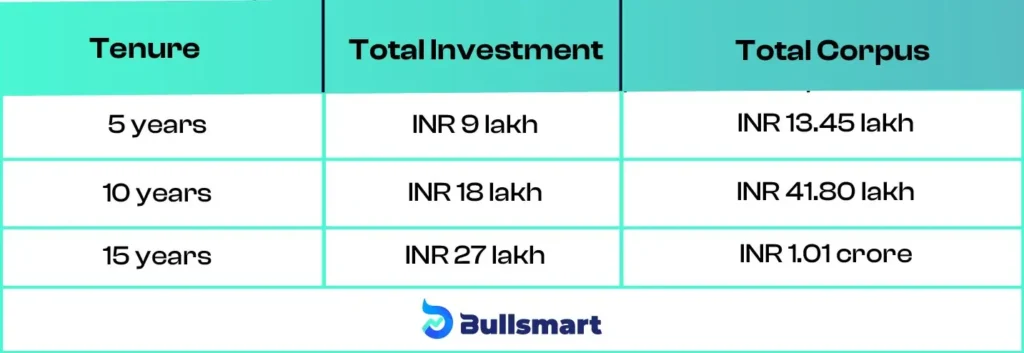
With only INR 27 lakh invested over 15 years, you could accumulate over INR 1 crore. But, if you extend your investment to 20 years, your corpus could grow to INR 2.28 crore!
Advantages of the 15x15x15 Rule
- Disciplined Investing: This strategy promotes a systematic approach to wealth creation, encouraging you to invest regularly without reacting impulsively to market fluctuations.
- Clear Goals: With fixed amounts and returns, it helps set specific financial goals, making it easier to monitor your progress.
- Power of Compounding: Consistent investment and reinvestment over 15 years allows you to benefit from compounding, helping you achieve significant growth.
- Long-Term Perspective: By focusing on the long-term, you avoid the temptation to make decisions based on short-term market movements.
Tips for Success with the 15:15:15 Rule in Mutual Fund
- The earlier you begin, the more time compounding works in your favor.
- Reduce risk by investing in a mix of mutual funds.
- Stick to your monthly investments, even during market downturns.
- Periodically rebalance your portfolio to align with your goals.
- Stay invested in the long term to reap the full benefits.
Conclusion
The 15:15:15 rule in mutual funds is a simple framework that shows how consistency and time can work together to build meaningful wealth. By investing regularly and staying committed for 15 years, you give compounding enough space to do its job.
That said, it is important to remember that market-linked investments, especially in equity funds, come with risk. Returns are not guaranteed, and performance can vary depending on market conditions. The rule works best as a disciplined approach, not as a promise of fixed outcomes.
What it truly highlights is the value of patience. Wealth creation rarely happens overnight. It builds gradually when you stay invested through market cycles and avoid reacting emotionally to short-term fluctuations.
If you are unsure about how to structure your investments or choose suitable funds, consider speaking with a financial advisor. A professional can help align this strategy with your income, risk appetite, and long-term financial goals, ensuring your plan is both realistic and sustainable.
Suggested Read – The 8-4-3 Rule of Compounding in Mutual Funds SIP
Disclaimer: Investments in securities market are subject to market risks, read all the related documents carefully before investing. The securities are quoted as an example and not as a recommendation.


